





Your car’s oil acts as the narrator. Its guiding the story forward, keeping everything running smoothly behind the scenes. In biology, it’s the mitochondria, the powerhouse of the cell, fueling every function under the hood. In athletics, oil is essential for proper hydration: skip it, and your performance will suffer.
No matter how it’s framed or the comparisons drawn, motor oil plays the pivotal role in your vehicle’s longevity and performance. But, for the play to go on, you have to set the scene.
How often should you schedule a Dodge oil change? How long does it take? How is it even done?
Keep reading as our Chrysler, RAM, Jeep, and Dodge service center takes you step by step through the most daunting questions about an oil change and how we can be a supporting character along the way.
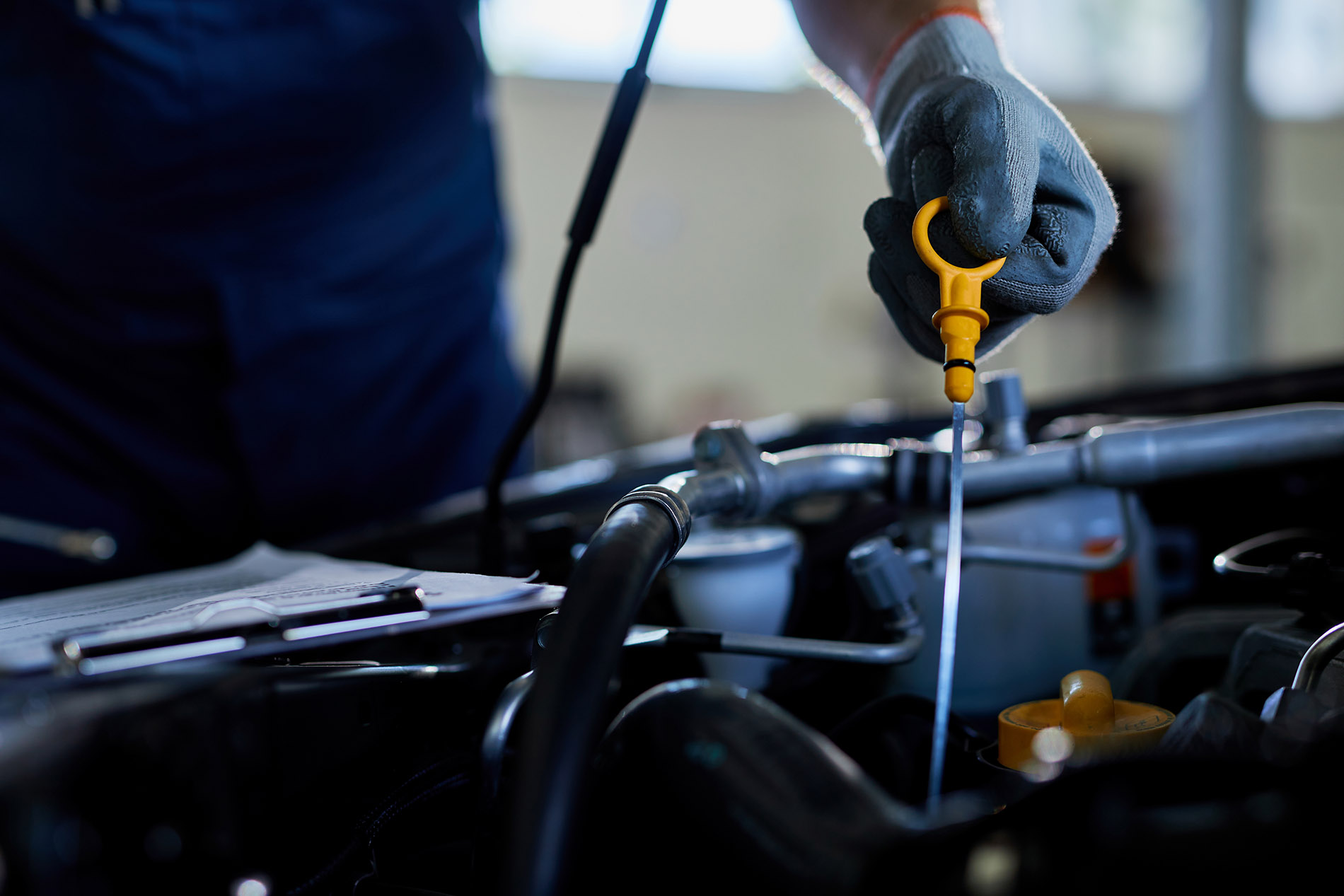
Types of Oil–And What Type of Oil to Use in Your Car
Just as you would find on a menu at your favorite restaurant, “feeding” your vehicle comes with options, and understanding the differences between oil types can help you make an informed decision about which is best for your ride.
There are three common types of oil: conventional, synthetic, and semi-synthetic (synthetic blend).
Conventional Oil
Conventional oil is made from refined crude oil. Now, it’s primarily used for older models or vehicles with very basic engines.
However, conventional oil tends to break down faster than other types of motor oil, which is one of the main reasons it has been largely phased out.
Synthetic Oil
Unlike conventional oil, synthetic oil is lab-created. Given its origins, it contains fewer natural impurities that tend to form into sludge over time and won’t break down as quickly.
Synthetic oil is often the oil of choice for high-performance or high-mileage engines, as well as older engines that require an extra layer of protection. Synthetic oil costs more upfront, but you’ll have fewer oil changes overall.
Semi-Synthetic or Synthetic Blend
As the word “blend” may suggest, this type of oil is a combination of conventional and synthetic oil. Semi-synthetic oil sits between the extremes in performance, price, and service center visits for an oil change, making it a worthwhile choice for someone who wants the benefits of synthetic without the price tag.
How Often Should You Change Your Oil
Your car’s oil breaks down over time due to heat and pressure, leading to the buildup of harmful particles in the engine. The particles will eventually seep into the engine and, combined with the loss of friction that oil provides, will reduce performance, fuel efficiency, and cause unnecessary wear and tear.
An oil change costs much less than a new engine, so it’s vital to the health of your vehicle to know when to change your motor oil.
- Conventional: Generally every 5,000 miles
- Synthetic: Every 10,000 to 15,000 miles
- Semi-Synthetic: Every 6,000 miles
Keep in mind that there is no “one-size-fits-all” for an oil change. Your vehicle model, engine condition, driving habits, oil type, and other factors affect how often you should schedule routine maintenance.
When in doubt, our team at House CDJR in Red Wing can answer your oil change questions and provide guidance to help you make an informed decision for your vehicle.
Ready to Schedule an Oil Change? Reach out to House CDJR Today!
Changing your car’s motor oil regularly is fast, simple, and cost-effective, especially when done by people you can trust.
At House Chrysler Dodge Jeep RAM, our service center understands your Dodge, Jeep, RAM, and Chrysler vehicles like no one else and is equipped with the tools and knowledge to help you keep it running in top condition.
Explore our service specials for oil change coupons, then schedule an appointment with our team today!
Disclaimer: This blog is for informational purposes only. Oil change intervals and recommendations may vary by vehicle model, engine type, driving conditions, and other factors. Always consult your owner’s manual or a certified service technician at your local Chrysler, Dodge, Jeep, or RAM dealership for guidance specific to your vehicle.
Connect with us


- 2025 Chrysler Voyager
- 2025 Dodge Durango
- 2025 Dodge Hornet
- 2025 Jeep Grand Cherokee
- 2025 RAM 1500
- 2026 Chrysler Pacifica
- 2026 Dodge Charger
- 2026 Dodge Durango
- 2026 Jeep Cherokee
- 2026 Jeep Grand Cherokee
- 2026 Jeep Recon
- 2026 RAM 1500
- 2026 RAM 2500
- HEMI V8
- House Chrysler Jeep Dodge RAM
- Jeep Gladiator Accessories
- Uncategorized
- Used RAM 1500